Not all honor societies are honorable.
 The CEO of Sigma and the CEO of an organization that established an honor society for nurses with associate degrees provide perspectives on the purpose and value of honor societies.
 As leaders of honor societies, we are frequently asked, “Why does the world need honor societies?” Here’s our answer:
Honor societies recognize superior academic and leadership attainment. In the United States, many of them started in university- and college-based settings in the late 1800s and early 1900s. Members of Sigma Theta Tau International Honor Society of Nursing (Sigma) know the story of the six student nurses from Indiana University Training School for Nurses who founded Sigma in 1922. Part of their motivation for starting Sigma and recognizing excellence in academic and clinical nursing leadership was seeing other honor societies at their university.
 In 2012, the Organization for Associate Degree Nursing (OADN) established Alpha Delta Nu (ADN), the honor society for nursing students and graduates of community colleges and other institutions granting associate degrees. The objectives of ADN are to recognize scholarship and academic excellence, encourage pursuit of advanced degrees in nursing, and promote continuing education as a lifelong professional responsibility. Alpha Delta Nu has quickly grown to more than 140 chapters nationwide.
How many honor societies are there? This is hard to determine as no overarching body oversees honor societies. The Association of College Honor Societies (ACHS), founded in 1925, has more than 60 member societies. Leaders of ACHS recognize that there are many other legitimate honor societies that do not meet the organization’s membership criteria (e.g., specific grade-point averages) or choose not to join. Unfortunately, unethical groups have set up “honor societies” designed only for profiteering. All legitimate honor societies have a responsibility to identify such groups when asked. To identify “scam” honor societies, click here to access resources available on the ACHS website.
Just as Sigma recognizes excellence in nursing, other international honor societies promote achievement in disciplines such as sociology (Alpha Delta Kappa), education (Kappa Delta Pi), and business and management (Beta Gamma Sigma). The value of honor societies is not always recognized in other regions of the world, in part because such organizations often do not exist. Thus, representatives of international honor societies such as Sigma have to explain that, while we recognize and honor academic and leadership attainment, we are not “elitist” organizations. Sigma’s mission is “advancing world health and celebrating nursing excellence in scholarship, leadership, and service.” Hardly elitist goals!
So, our answer is yes, the world does need honor societies, and we have much to offer those who enter our professions and disciplines and seek to excel over the course of their careers. RNL
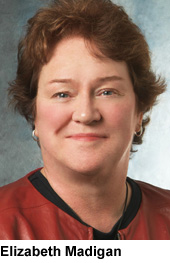
Elizabeth “Liz” Madigan, PhD, RN, FAAN, chief executive officer of Sigma, is a member of Sigma’s Alpha Mu Chapter.
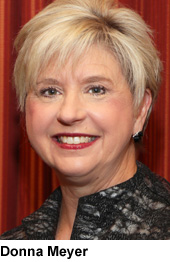
Donna Meyer, MSN, RN, ANEF, FAADN, chief executive officer of the Organization for Associate Degree Nursing (OADN), is a member of Sigma’s Epsilon Eta Chapter.