Inside the box or outside, the operative word is “thinking.”
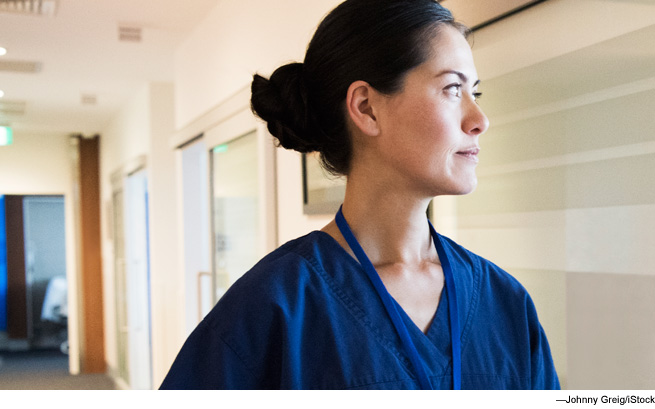
For nurses, critical thinking and clinical reasoning are essential. Watch RNL for a soon-to-be-posted Q&A article to learn about a resource that helps develop both.
They say men are slow to ask for directions. Click here and here to access columns by women explaining why males are so reluctant to ask for information on how to get from Point A to Point B.
 Personally, I’ve never found that stereotype worthy of advancing by personal example. Ask my wife. She’ll tell you that if I walk into a big-box store in search of a product, chances are, after a quick scan of major clues such as signs, I’ll ask an associate, if I can find one. The way I see it—thinking inside the box—I could walk one-eighth of a mile to the other end of that cube only to learn the desired product is 20 feet from where I entered the store.
Aisle signage, incidentally, is not infallible. Not long ago, I entered one of those big boxes to purchase bottled water. When I failed to find it in Aisle 26—the one labeled “Water”—I asked an associate and was informed that bottled water is in Aisle 28, information I continue to find useful when purchasing water at that establishment.
In search of …
My penchant for asking directions sooner rather than later explains my appreciation for search engines. As the author of a biographic history of those who contributed to the science of nuclear magnetic resonance and MRI, its technological derivative, I spent a major portion of three years in the mid-1990s conducting research via the mail (postal, not e) and in libraries. So when effective search engines came along following the birth of the World Wide Web, I welcomed them.
The most notable, of course, is Google, its dominance evidenced by the fact that its name quickly became a verb. Enter a few terms relevant to a topic of interest, press return (enter on a PC) and voilà—up comes a page, sometimes many pages, identifying possible places to find answers to my question. In my 17-plus years as editor of Reflections on Nursing Leadership, I don’t know what I would have done without Google.
When I come across a term I’m not familiar with, I Google it and find a relevant definition. When I’m preparing a manuscript for publication that is authored by an educator and need more information to compose the author’s bio, a quick search provides the institutional URL, and a few more clicks provide the author’s credentials and academic title. When I question the spelling of a term used by an author, a quick Google search either confirms the spelling or contradicts it. The beauty of Google is that, in addition to providing sources of information, it allows for viewer discretion in deciding which source is trustworthy or relevant.
Sometimes, I’ll gauge a link’s trustworthiness by its popularity, but not often. Just because 13 million people clicked the same link doesn’t mean they were smarter or more discerning than the 2,500 people who clicked a less popular link. If search engines had been around before mariners proved the earth wasn’t flat, popular navigation sites might have warned against the dangers of traveling too close to the edge, and few web surfers would have considered RoundEarthSociety.com trustworthy. (Sorry, that domain is taken. I checked. RoundEarthSociety.net is available, though, as of this writing.)
The answer is …
I became concerned when I read an article in The Wall Street Journal titled “Google has picked an answer for you—too bad it’s often wrong.” Wait a minute! What happened to Google’s respect for reader discretion in selecting a credible site?
They still give you a choice. Google continues to provide more link options in response to search terms than anyone usually has time to consider. But the option they highlight—the option they pick, as suggested in the article’s headline—may lead some readers to assume it’s the right answer. (The chance that Google will suggest a right answer is greater on a mobile device than on a desktop unit.)
That’s why critical thinking is so important. According to The Critical Thinking Community: “Critical thinking is that mode of thinking—about any subject, content, or problem—in which the thinker improves the quality of his or her thinking by skillfully analyzing, assessing, and reconstructing it. Critical thinking is self-directed, self-disciplined, self-monitored, and self-corrective thinking.” The Critical Thinking Community—what a lovely place to live!
In an age of image macros, those ubiquitous fill-in-the-blank propaganda memes that dominate Facebook and other social media and tell us what to think (not how), we definitely need more critical thinking. In healthcare, sound clinical reasoning and critical thinking go hand in hand. A resource for developing both is a recently published Sigma book titled The Essentials of Clinical Reasoning for Nurses. Although it’s written for RNs, many of the principles it espouses will promote mental clarity in any big box you find yourself in—including hospitals.
Click here to access “Sigma book helps nurses improve clinical reasoning,” a Q&A article in which RuthAnne Kuiper, PhD, RN, CNE, ANEF, and Daniel J. Pesut, PhD, RN, FAAN, two of the book’s four authors, respond to my questions. RNL
James E. Mattson is editor of Reflections on Nursing Leadership.