During the 36th International Nursing Research Congress in Seattle, Washington, USA, Sigma inducted 15 distinguished members into the International Nurse Researcher Hall of Fame. This honors Sigma members who have achieved significant and sustained national and/or international recognition for their work, and whose research has impacted the profession and the people it serves. Read more about each honoree and their research below!
Taipei, Taiwan
Cheryl Chia-Hui Chen is a professor and the Director of the School of Nursing at National Taiwan University (NTU), where she also serves as Executive Director of Nursing at NTU Hospital. She earned her Doctorate in Nursing Science from Yale University and is a board-certified gerontological nurse practitioner in the United States. Her research centers on nurse-led interventions to prevent and manage hospital-acquired complications (such as delirium, dysphagia, malnutrition, and functional decline) among critically ill older adults. Her work aims to improve clinical outcomes through sustainable, evidence-based practices in acute care settings.
As a leader across NTU’s flagship hospital and five affiliated institutions, Dr. Chen guides strategic improvements in nursing care delivery, infrastructure optimization, and workforce development. Her commitment to mentoring and teaching has been recognized through seven Excellence in Teaching Awards, and she has received numerous research honors, including the US National Research Service Award and Yale University’s Anthony DiGuida Delta Mu Research Prize. Her research on nurse-driven interventions has been published in leading journals including JAMA Network Open, JAMA Surgery, Critical Care, and International Journal of Nursing Studies. She is currently focused on translating effective nursing interventions into scalable hospital programs in Taiwan and internationally. Dr. Chen is a member of Sigma’s Lambda Beta-at-Large Chapter.
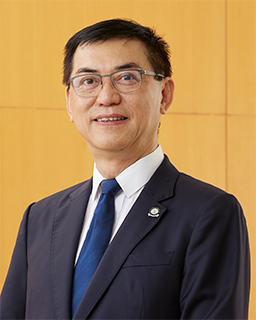 Wai-Tong Chien, PhD, MPhil, PGDip(NEd), BN(Hons), RMN, FAAN, FHKAN
Hong Kong
Professor Wai Tong Chien is Director of the Nethersole School of Nursing at The Chinese University of Hong Kong. He is internationally recognized for his contributions to psychiatric and mental health nursing education, research, and policy. He was named an Outstanding Fellow of the CUHK Faculty of Medicine and is an Honorary Fellow of the Hong Kong Academy of Nursing and Midwifery. He is also a Fellow of the American Academy of Nursing and a founding Fellow of the Hong Kong Academy of Nursing in Education and Research.
Prof. Chien has played a leading role in shaping psychiatric nursing curricula, licensure standards, and clinical practice guidelines across Asia. He serves on numerous international editorial boards and review panels for nursing and health funding agencies. He has secured over 60 competitive external research grants and more than 30 university-funded interdisciplinary awards. His work has resulted in over 290 peer-reviewed publications in international journals, as well as numerous book chapters and conference presentations.
His research aims to improve mental health outcomes through education, clinical innovation, and evidence-based practice. He is a member of Sigma’s Pi Iota at-Large Chapter.
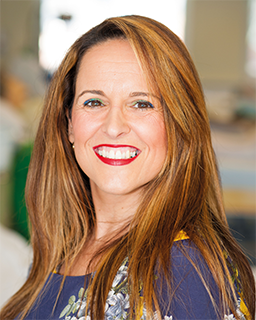
Vanessa Heaslip, PhD, DN, MA, BSc (Hons), RN, DipHE
Salford, England
Professor Vanessa Heaslip is a Professor of Nursing and Healthcare Equity at Salford University. Her research focuses on communities that experience health inequity and social exclusion and whose voices are traditionally not heard in academic and professional discourse. She has worked with a variety of groups, including Gypsy, Roma, Travellers, people living with mental health issues, people in prison, and people from ethnic and racialized communities. To ensure a diverse nursing workforce that reflects the communities it works with, Professor Heaslip has conducted research in widening participation and fair access in nursing education. Recently, she has examined issues of digital and health programme inclusion within social care.
Professor Heaslip has numerous publications, including book contributions, professional and peer-reviewed journal articles, editorials, and discussion papers (see Prof Vanessa Heaslip on worktribe.com). Using her skills and expertise, she supports novice writers and students, from undergraduate to doctoral levels, to publish. She is also an Associate Editor with Nursing Open and on the editorial board of Health Equity Journal. She is a member of Sigma’s Phi Mu Chapter.
.png?Status=Master&sfvrsn=3677f5f2_1)
Alison Kitson, DPhil, BSc(Hons), RN, FRCN, FAAN, FAAHMS
Bedford Park, Adelaide, Australia
Alison Kitson is recognized internationally as a leading research translation scientist, nurse leader, and champion of improving fundamentals of nursing care research and practice. She is the chair of the International Learning Collaborative (ILC), which she established in collaboration with organizations dedicated to improving fundamental care across healthcare systems globally. Her experience spans establishing national programs on standards of nursing care, supporting the development of national clinical guidelines, and running a series of highly successful national clinical leadership programs in the United Kingdom.
Over the years, she has held several leadership roles, including Dean of the Adelaide Nursing School at the University of Adelaide (2009-2015), Executive Director of Nursing at Central Adelaide Local Health Network (2013-2015), and Vice President and Executive Dean of the College of Nursing and Health Sciences at Flinders University, South Australia (2017-2024). She established the Caring Futures Institute in 2019 and served as its Foundation Director from 2019-2024. She continues to serve in adjunct professor roles in universities across the globe. Her contribution to nursing and healthcare research has been recognized with many awards and honours in the United Kingdom, the United States, Europe, and Australia. She is a member of Sigma’s Psi Eta Chapter.
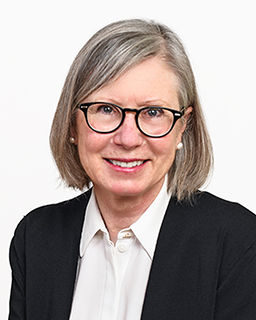
Pamela Martyn-Nemeth, PhD, RN
Chicago, Illinois, USA
Pamela Martyn-Nemeth is a professor in the Department of Biobehavioral Nursing Science, College of Nursing at the University of Illinois, Chicago. She began her career as a clinical nurse specialist in nutritional support.
Her research is focused on reducing cardiovascular disease (CVD) and improving self-management behaviors and quality of life in persons with type 1 diabetes (T1D). Despite advances in diabetes management and technology, only 26% of adults with T1D achieve glucose targets associated with CVD risk reduction, because glucose targets largely depend on the day-to-day behaviors and self-management practices of those with the condition. People living with T1D experience many challenges and barriers to successfully managing their diabetes. She has approached this problem by examining these barriers and developing and testing interventions to improve self-management behaviors, glucose control, and quality of life. She is a member of Sigma’s Alpha Lambda Chapter.

Mercy Ngosa Mumba, PhD, RN, FAAN
Tuscaloosa, Alabama, USA
Dr. Mercy Mumba is an award-winning scientist and the Associate Dean of Global Initiatives and Community Partnerships at the University of Alabama, Capstone College of Nursing. Her work is widely funded by many United States federal agencies, totaling over $33 million in grant funding. She is a professor and the Founding Director of the Center for Substance Use Research. She currently serves as the President-Elect of the Southern Nursing Research Society, the section editor for the Journal of Psychosocial Nursing and Mental Health Services, and a member of the American Academy of Nursing Psychiatric, Mental Health, and Substance Use Expert Panel. Dr. Mumba is the author of the award-winning book A Nurse’s Step-By-Step Guide to Transitioning to an Academic Role: Strategies to Jumpstart Your Career in Education and Research. Dr. Mumba is an internationally acclaimed keynote speaker and coach.
As President and CEO of Infinity Research LLC., her work centers on creating value, innovating sustainably, optimizing outcomes, and accelerating success for individuals, organizations, and governments. She is passionate about improving health and the human condition and is a strong advocate for increasing research productivity, infrastructure, and human capital globally. She is a member of Sigma’s
Epsilon Omega Chapter.
LaRon E. Nelson, PhD, FNP, RN, FNAP, FNYAM, FAAN
New Haven, Connecticut, USA
LaRon E. Nelson is the Independence Foundation Professor at the Yale School of Nursing and is the Director of the Justice, Community Capacity & Equity Core in the Center for Interdisciplinary Research on AIDS at the Yale School of Public Health. His research focuses on developing and testing multi-level intervention strategies to help stop the spread of HIV in the United States, Canada, and Ghana. He is also interested in investigating microeconomic, macroeconomic, and finance-related influences on the adoption and sustainable scaling of health innovations. Dr. Nelson is the co-founder and chief scientific advisor of tuliptree systems, LLC—a web-based care coordination platform that enables data sharing between networks of service providers involved in supporting patients with complex social and medical needs. His work has been sponsored by the National Institutes of Allergy & Infectious Diseases, National Institute of Nursing Research, National Institute of Mental Health, Canadian Institute of Health Research, and The Li Foundation.
Dr. Nelson is a trustee of the Yale China Association, and he is an elected Fellow of the New York Academy of Medicine and the American Academy of Nursing. He is a member of Sigma’s Epsilon Xi Chapter.
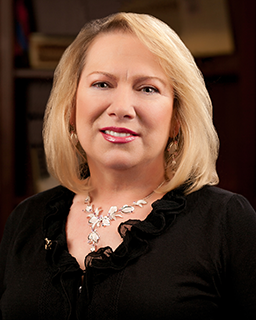
Patrice K. Nicholas, DNSc, RN, DHL (Hon.), MPH, MS, FAAN
Charlestown, Massachusetts, USA
Dr. Patrice K. Nicholas is Distinguished Teaching Professor Emerita and Director Emerita of the Center for Climate Change, Climate Justice, and Health at the MGH Institute of Health Professions School of Nursing. Dr. Nicholas completed a Bachelor of Science degree in Nursing at Fitchburg State University, a Master of Science in Nursing, and a Doctor of Nursing Science at Boston University. From 1996 to 1999, she was a postdoctoral fellow at the Harvard T. H. Chan School of Public Health, where she focused on symptom management in HIV disease and global health and completed a Master of Public Health in International Health. Over the years, she has received numerous honors and awards. In 2007, she was selected as a Fulbright Senior Scholar at the University of KwaZulu-Natal, South Africa, focusing on adherence to HIV and TB medications. In 2008, she was inducted as a fellow of the American Academy of Nursing. In 2010, she received a Doctor of Humane Letters degree Honoris Causa from Fitchburg State University. She received the American Nurses Association/Massachusetts Living Legend Award in 2024.
Dr. Nicholas has authored over 100 peer-reviewed manuscripts, two texts, and many invited and peer-reviewed presentations, including numerous manuscripts on climate change, climate justice, and climate-related health consequences. Dr. Nicholas served as co-Director for Policy and Advocacy at the Massachusetts General Hospital Center for the Environment and Health. In 2023, she was selected as an Inaugural Climate Change and Health Scholar at the National Institutes of Health/National Institute of Nursing Research. In 2024, Dr. Nicholas was an invited scholar in climate change and health at the University of Oxford Harris Manchester College. She is a member of Sigma’s Theta at-Large Chapter and Upsilon Lambda Chapter.
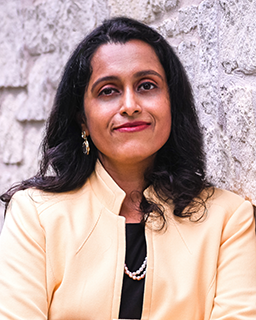
Kavita Radhakrishnan, PhD, RN, FAAN, FAHA
Austin, Texas, USA
Dr. Kavita Radhakrishnan is the Associate Dean at the University of Texas Austin School of Nursing. Dr. Radhakrishnan’s research applies current and emerging technologies such as telemonitoring, connected sensors, and digital gaming to facilitate chronic disease self-management. Her goal is to develop affordable and scalable health interventions that enable ‘aging in place.’ She has received over US $6.8 million in funding from the National Institute of Heart, Lung, and Blood Institute, and the National Institute of Nursing Research at the National Institutes of Health for her projects studying digital games for self-management in adults with cardiovascular diseases. These projects aim to address health disparities in heart failure in the southern US as well as in hypertension outcomes among Native Americans. She has authored more than 60 articles on the subject, which have been cited in publications from more than 30 countries.
Dr. Radhakrishnan has served as an expert advisor on the American Heart Association’s policy task force on implementation of telehealth in cardiovascular and stroke care and is a member of the American Heart Association’s Cardiovascular and Stroke Nursing Committee and the Quality of Care and Outcomes Research Committee. She serves on national committees for the National Institutes of Health and the Expert Panel on Informatics and Technology of the Fellows of the American Academy of Nursing. Dr. Radhakrishnan is a member of the Texas Department of Health and Human Services' Texas Cardiovascular Disease and Stroke Partnership. She also served as the Board Commissioner for the City of Austin Asian American Quality of Life Commission (2016-2020). Currently, Dr. Radhakrishnan is the Dolores Sands Fellow at the University of Texas Austin School of Nursing. She is a member of Epsilon Theta Chapter.

Karen Saban, PhD, RN
Chicago, Illinois, USA
Dr. Saban is recognized as a prominent national and international expert in chronic social stress and inflammation in underrepresented women. For the past 13 years, she has led a program of research focused on social context and inflammation as mechanisms to explain disparities in cardiovascular disease in underrepresented women. This work led her to examine interventions to improve well-being and ameliorate chronic stress-related inflammation associated with discrimination and racism. She has secured over US $13 million in extramural funding as a Principal Investigator or Co-Investigator. Currently, she leads an interdisciplinary research team to examine the impact of a race-based stress reduction intervention to improve well-being, decrease inflammatory burden, and alter DNA methylation patterns in older African American women at risk for cardiometabolic disease. This is one of the first interventions developed to address trauma related to racism and discrimination in Black women. This five-year randomized clinical trial is funded by the National Institutes of Health, National Institute on Aging for over US $3 million.
Dr. Saban has made substantial contributions to scientific literature with 42 published manuscripts and has published in high-impact journals in both nursing and non-nursing peer-reviewed journals such as Stroke, Journal of Internal Medicine, and Western Journal of Nursing Research. Many of her publications include students and early career faculty. Furthermore, she has presented internationally, nationally, and regionally, including at the International Nursing Research Congress. She has served on the editorial board of Biological Research for Nursing for over 10 years and is a grant reviewer for the NIH study section, underscoring her standing in the research community. She is recognized nationally as a Fellow in the American Academy of Nursing (FAAN) and Fellow in the American Heart Association (FAHA). She is a member of Sigma’s Alpha Beta Chapter.
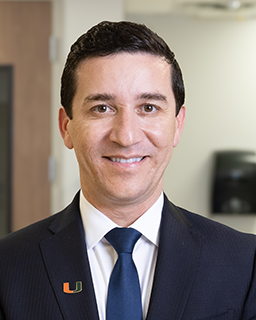
Hudson Santos, PhD, RN, FABMR, FAAN
Coral Gables, Florida, USA
Dr. Hudson P. Santos Jr. is the dean of the University of Miami School of Nursing and Health Studies. He is also a tenured professor and the inaugural Dolores J. Chambreau, RN Endowed Chair in Nursing. As one of the most NIH-funded nurse scientists in the United States, Dr. Santos has secured over US $50 million in research funding. Dr. Santos’ program of research has informed clinical practice by uncovering how psychosocial and biological dimensions of early-life adversity interact with the genome to shape perinatal and child health outcomes. These findings have led to early intervention strategies that are integrated into care for high-risk and racially diverse populations. His integration of multi-omics methods into nursing science has set new standards for addressing complex health disparities and represents a significant methodological advancement in the field.
Dean Santos is the immediate past-president of the International Society of Nurses in Genetics (ISONG), chair-elect of the Council for the Advancement of Nursing Science (CANS) National Advisory Council, a Fellow of the American Academy of Nursing, and the Academy of Behavioral Medicine Research. He is a member of Sigma’s Beta Tau Chapter.
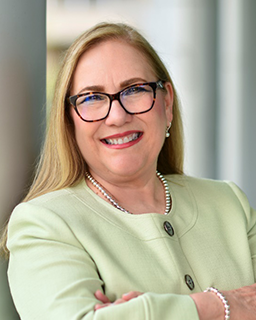
Maria R. Shirey, PhD, MBA, RN, NEA-BC, ANEF, FACHE, FNAP, FAAN
Birmingham, Alabama, USA
Dr. Maria R. Shirey, Dean and Fay B. Ireland Endowed Chair in Nursing at The University of Alabama at Birmingham (UAB) School of Nursing, serves as the school’s fifth dean in its 75-year history. As the school’s Chief Nurse Administrator, she is the senior executive responsible for academics, research, and service. She serves as Director of the School’s Pan American Health Organization/World Health Organization (PAHO/WHO) Collaborating Centre for International Nursing, a designation the School has maintained for over 30 years. Dr. Shirey is a member of the UAB Medicine Enterprise Board of Directors that governs the UAB Hospital and Health System.
A tenured professor, Dr. Shirey teaches and mentors students in both the PhD and DNP programs. Her areas of scientific inquiry focus on leadership science and health services outcomes research across the health care continuum. Dr. Shirey is a prolific author, editor, and speaker who has disseminated her work in 167 publications and 250 presentations across the globe.
Dr. Shirey holds a Bachelor of Science in Nursing from Florida State University, a Master of Science in Nursing from Texas Woman’s University, a Master of Business Administration from Tulane University, and a PhD in Nursing Science from Indiana University. She is board-certified in advanced nursing executive practice and health care management and is a Fellow in four prestigious academies, including the American College of Healthcare Executives, American Academy of Nursing, Academy of Nursing Education, and National Academies of Practice. She is a member of Sigma’s Nu at-Large Chapter and Omicron Psi Chapter.
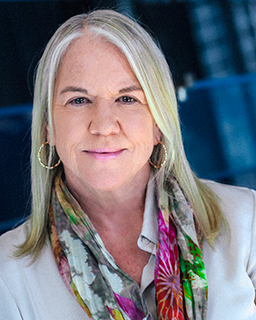
Jennifer N. Stinson, PhD, RN-EC, CPNP, FCAHS, FAAN
Toronto, Ontario, Canada
Dr. Jennifer Stinson is a globally recognized expert in digital interventions for the assessment and self-management of painful childhood illnesses such as juvenile idiopathic arthritis, sickle cell disease, chronic pain, and cancer. She is a nurse clinician-scientist at The Hospital for Sick Children (SickKids) in Toronto, where she serves as Co-Director of the Pain Management, Research and Education Centre (Pain Centre) and as a nurse practitioner in the Chronic Pain Program. As a senior scientist in the Child Health Evaluative Sciences research program at SickKids, her research has been instrumental in developing and implementing electronic health (e-health) and mobile health (m-health) technologies, such as electronic diaries and internet-based disease management programs, to enhance the assessment and management of pain in pediatric populations.
Dr. Stinson, who holds the Mary Jo Haddad Nursing Chair in Child Health and is a Professor in the Lawrence S. Bloomberg Faculty of Nursing at the University of Toronto, spearheads national and international initiatives to train the next generation of clinicians and researchers in pain management and research. She emphasizes promoting self-management strategies among children and their families, knowledge translation, patient engagement, and interprofessional pain education. She is a member of Sigma’s Lambda Pi at-Large Chapter.
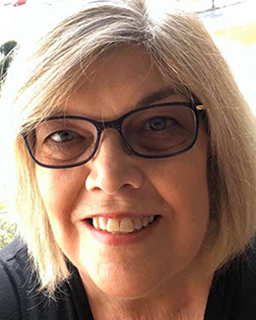
Marcia L. Van Riper, PhD, RN, FAAN
Chapel Hill, North Carolina, USA
Marcia Van Riper is a professor at the University of North Carolina at Chapel Hill. She has a joint appointment in the School of Nursing and the Carolina Center for Genome Sciences. She served as the Division Chair for the Family Health Division for 10 years. She is a Faculty Associate in the UNC Center for Bioethics. With a clinical background in maternity, pediatric, and family nursing, she has made significant contributions to global scholarship on family life and genetic conditions, including Down syndrome, sickle cell disease, cystic fibrosis, hereditary breast and ovarian cancers, Huntington disease, and Factor V Leiden. Findings from her multilevel, multidimensional studies grounded in family frameworks have provided an evidence base for the development of interventions, practice guidelines, and policies that build on the strengths of these families, while still recognizing the challenges of caring for an individual with a genetic condition. Throughout her career, she has been very committed to using a family perspective to integrate genomics into her research, teaching, and practice. She was a Fulbright Scholar Ireland at University College Cork (2012-2013), a Fulbright Specialist Spain at the University of Navarra (2015), and a Fulbright Specialist Iceland at the University of Iceland (2024). She also served as a visiting professor at universities in Brazil, Portugal, and Scotland. All of these opportunities involved offering training in family and genomic research, as well as providing faculty and student mentoring.
She has been honored as an exceptional researcher, educator, and mentor by nursing and interdisciplinary groups such as the International Family Nursing Association, the International Society of Nurses in Genetics, the North Carolina Down Syndrome Alliance, and the UNC Women’s Leadership Council. She has over 75 refereed publications, 175 refereed presentations (104 international), over 200 invited presentations (78 international), and 12 book chapters. She is a member of Sigma’s Alpha Alpha Chapter.
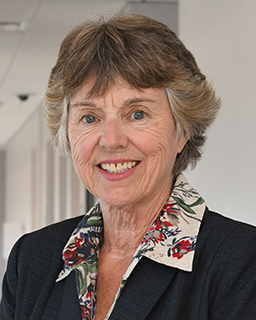
Kristine N. Williams, PhD, RN, FNP-BC, FGSA, FAAN
Lawrence, Kansas, USA
Kristine Williams is a nurse gerontologist and E. Jean Hill Professor at the University of Kansas School of Nursing and a co-investigator with the University of Kansas Alzheimer’s Disease Research Center. She and her research team develop and test interventions designed to improve communication between nursing home staff and residents, as well as support family members caring for persons with dementia at home using technology. Dr. Williams’ early research linked the use of elderspeak communication (sounds like baby talk) among nursing home staff with behavioral and psychological responses of nursing home residents living with dementia. That research established that increasing staff awareness of elderspeak and its negative effects reduced their elderspeak use as well as behavioral responses in nursing home residents with dementia. Her team is currently testing her adapted online intervention with implementation support in a national pragmatic clinical trial and modifying the communication training program for diverse and under-resourced nursing home communities. She is a member of Sigma’s
Delta Chapter.